
Growing Ranunculus
Jessica Hall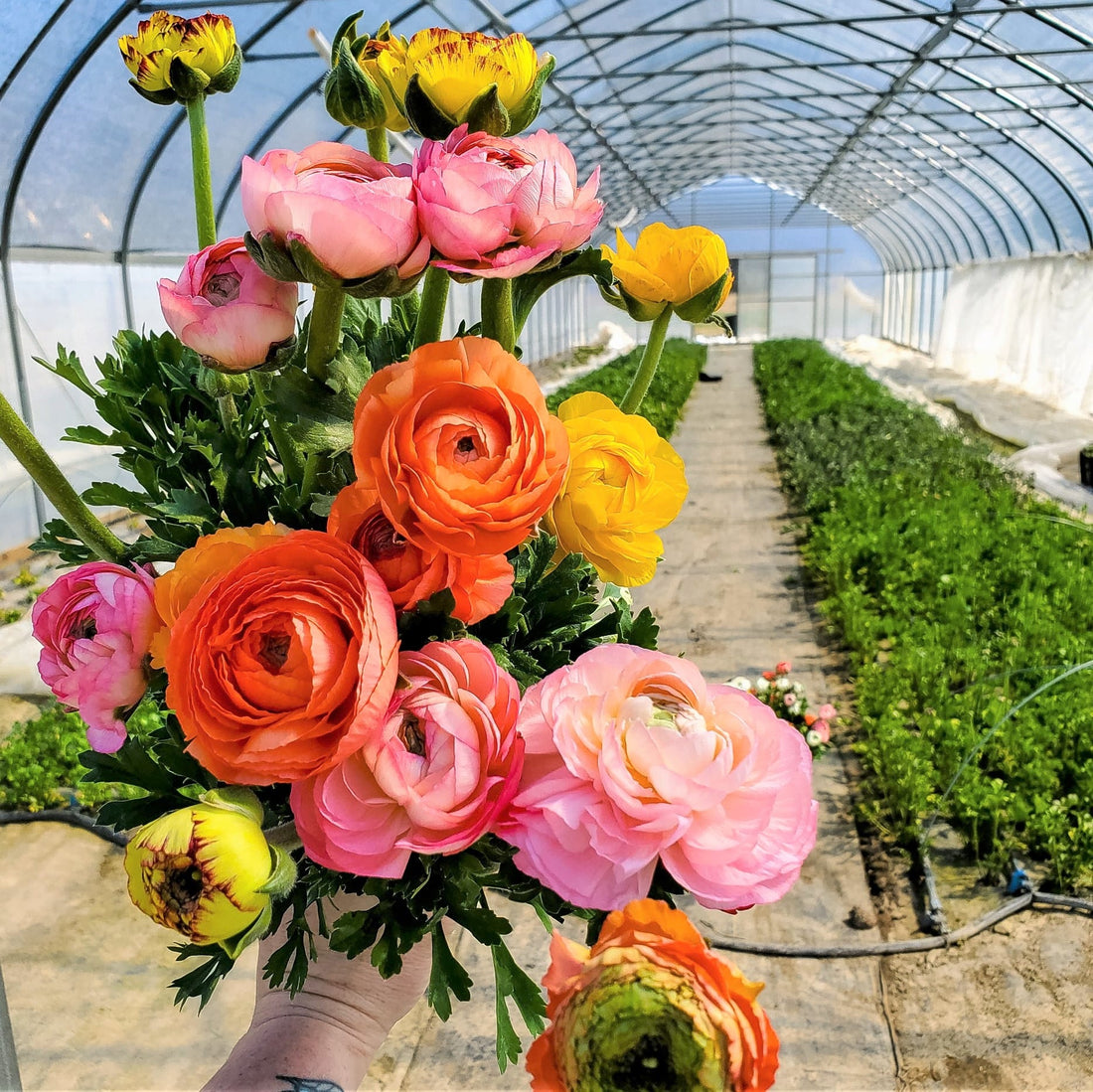
Ranunculus are a well-known spring flower and one of my personal favorites! This awesome crop comes in such a wide variety of colors and the blooms have so many petals. Like SO many. I’ve been growing it for a while but this is the first year that we grew it in our upgraded heated tunnel (read more about that here). There’s always more to learn but I wanted to share with you what I’ve found from my experience with ranunculus (aka buttercups).
GROWING ZONE
Most ranunculus are grown as a tender perennial but are only considered perennially hardy in zones 7b - 9. Our farm is in zone 7b (let me know if you want a blog post about growing zones). With protection, they can be grown in zones as low as 3.

PLANTING
If kept protected, you can plant ranunculus in late fall and if not, wait till early spring. Make sure you plant them in a warm, sunny place! With fingers pointing down, the corms are planted 1 to 2 inches below soil level and watered into well-drained beds. Be way of fungal issues as the crop starts to grow - they’re common with cool-season blooming flowers.
 |
 |
IN BLOOM
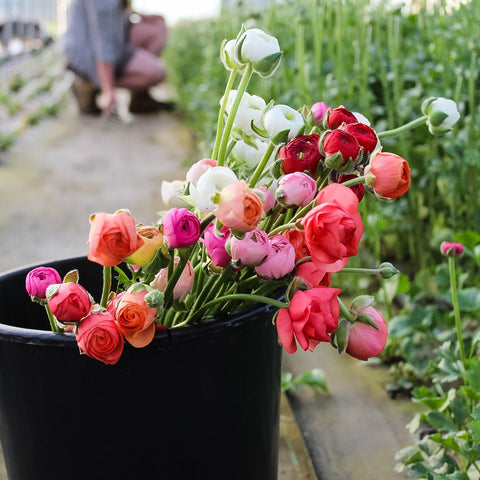
Ranunculus want cool, spring-like conditions so they’ll usually bloom from late March through early May. Since we had a heated environment for some of our plants this year, we had our first ones in January! They’ll bloom in profusion over a 4-6 week span and produce 5-10 blooms each. Ranunculus are harvested at the "marshmallow" stage when the bloom is soft to the touch like a marshmallow but before the petals have reflexed back.
 |
 |
STORAGE
Once the heat of summer forces the plant to dormancy, corms are dug and stored in low moisture out of direct sunlight. You can multiply your plants through corm divisions. We soak our ranunculus corms in the fall prior to planting so that the rootstock is rehydrated.

VARIETIES
There are many different varieties of ranunculus and I’ve tried a lot over the years but we consistently grow amandine (pictured on the left) and butterfly (pictured on the right) series. Amandine has the more traditional ranunculus look with big, fluffy blooms while butterflies have fewer petals and have an opened middle.
 |
 |
Ranunculus make great cut flowers because they have strong stems and a long vase life. If you want to experience these beauties IRL, you can get a bouquet full of these beauties here! I’m always curious: do you prefer amandine or butterfly ranunculus?

6 comments
Do you have to dig up the corms or is it possible to cover and leave them over winter? Zone 7b
Is digging up the tubers a requirement? As in, will they come back each year if I don’t dig them up? We’re in zone 7. Thanks!
Hey, I so enjoyed reading this article! I am very interested in growing these. I am in zone seven could you send me the blog post please? Thank you very very much. Have a great day!
Hi! I love ranunculus flowers and want to try to grow a cut flower garden of them this year along with cosmos and zinnia. I’m right on the line of 7b and 7a zones, in western North Carolina foothills. I am confused as to when I should plant outdoors? I’ve seen some people say to wait until spring when the ground won’t freeze and others say to plant in January. Any advice would be appreciated’
Lovely post! I’m in Richmond VA zone 7b. I’m growing flowers for my wedding only. If I want the majority of my ranunculus to bloom most prolifically in the first two weeks of May when would suggest I germinate and plant them? I have a grow tent indoors keeping the temp in 40s with lights. But I have also planted some corms outside in the fall. I have a few more I’m planning on germinating every week but I wasn’t sure if I needed to wait longer so they don’t peak in April. I know there is a risk if temps are up I don’t get but trying to plan for perfect weather haha